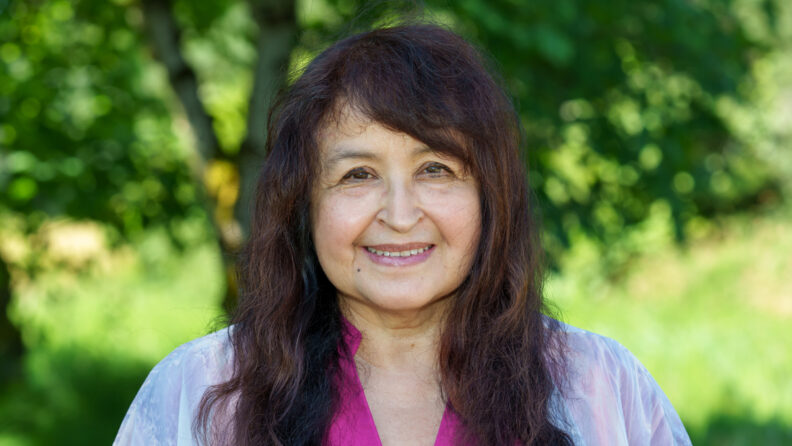
The Washington State University College of Veterinary Medicine recently welcomed diagnostic microbiologist Dr. JeanMarie Calvillo to the Washington Animal Disease Diagnostic Laboratory (WADDL), where she will help support the diagnosis of diseases affecting avian and other animal species. Dr. Calvillo, stationed at the Avian Health and Food Safety Laboratory in Puyallup, brings a broad background in environmental and molecular microbiology, with experience spanning academic, military, and diagnostic laboratories. Throughout her career, she has worked in microbiology research, molecular diagnostics, quality assurance, and environmental microbiology, applying her expertise to better understand microbes and their role in environmental and animal health.
What drew you to WSU’s College of Veterinary Medicine?
I’ve always loved birds. Early in my career, I was invited to study the gut microbiome of the Hoatzin in the Amazon Basin of South America. While I was not able to go, this piqued my interest in avian biology. Joining WSU’s College of Veterinary Medicine and contributing to bird health through diagnostic microbiology feels like coming full circle: back to class aves. I am also drawn to the synergistic environment at WADDL, where microbiology, molecular diagnostics, pathology, and veterinary medicine combine to solve real-world problems.
Q: What is your area of expertise?
My expertise is in environmental and molecular microbiology. Throughout my career, I have worked in microbiology research, molecular diagnostics, quality assurance, and environmental microbiology, with experience spanning academic, military, and diagnostic laboratories.
Q: What drew you into this area?
The organism that first captured my imagination was Bdellovibrio bacteriovorus, a bacterium that preys on others by growing its progeny inside its target host. I watched it under the microscope and fell in love. Years later, that fascination inspired me to create a scientifically accurate 3D animation of Bdellovibrio, which is featured in my Microbes in 3D portfolio. This passion for microbiology continued as I became fascinated by the metabolic diversity of microbes, which allows them to thrive in extreme environments and keep our planet, humans, and birds healthy.
Related link: Microbes in 3D portfolio (includes my Bdellovibrio bacteriovorus animation and other scientific illustrations and animations.)
Q: What about your research are you most proud of?
I am gratified that my research contributed to scientific knowledge on microbial consortia that transform environmental contaminants into harmless byproducts. Microbes ferment foods, protect our bodies, and clean up our planet—from PCB degradation to the removal of radioactive waste.* When I am not devoting my time toward avian disease diagnostics, I enjoy finding creative ways to bring messages about microbes to a wide variety of audiences so that microbes can be appreciated and known for the vast benefits they bring to us.
Related link: ASM.org article “How Do Microbes Remove Radioactive Waste?” featuring my Blender artwork.
Q: What’s something most people don’t know about you?
I am a Sherlockian Scholar and I enjoy cross-country skiing, playing keyboard, and creating immersive 3D worlds using Blender and Unreal Engine.