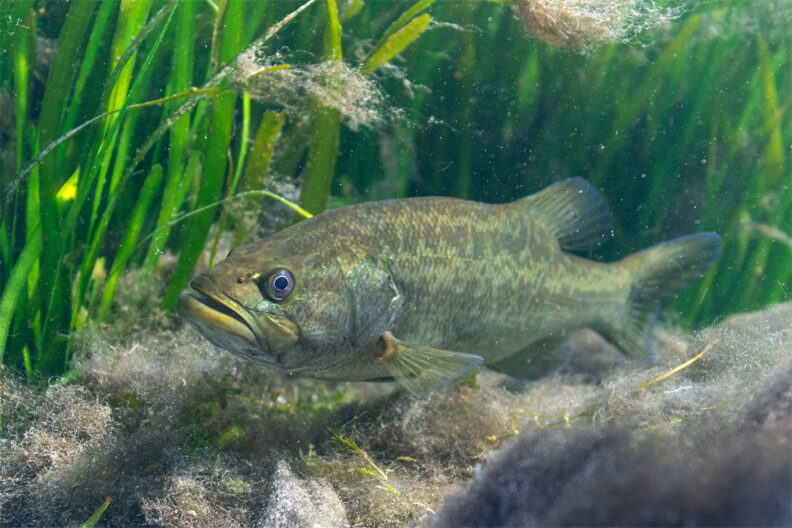
Largemouth bass virus (LMBV) is a globally emerging fish virus that infects centrarchid fish, including largemouth bass, smallmouth bass, and bluegill. This virus has been detected throughout the United States in recent years. LMBV can cause significant disease and mortality, particularly in largemouth bass, which is why it is of concern to fish health regulators.
Certification testing
Some states require largemouth bass and other warmwater fish species to be screened for LMBV prior to entry into their state. WADDL’s Aquatic Health Laboratory Section offers cell culture testing for LMBV following testing methodology from the American Fisheries Society-Fish Health Section Blue Book’s USFWS/AFS-FHS Standard Procedures for Aquatic Animal Health Inspections. Certification testing with cell culture takes 29 days to complete, so producers should schedule sample collection and submission with this timeframe in mind.
Diagnostic testing
For producers whose fish are having increased morbidity and/or mortality, LMBV may be a virus their veterinarian recommends testing for. WADDL offers several different diagnostic tests for LMBV, including histopathologic evaluation and PCR and sequencing, which have significantly faster turnaround times than traditional cell culture testing. WADDL has fish veterinarians with production, clinical, and diagnostic experience on staff available to answer veterinarians’ and producers’ questions about diagnostic testing for fish, including for LMBV.
Further information about LMBV
Read Pathology, Tissue Distribution, and Phylogenetic Characterization of Largemouth Bass Virus Isolated from a Wild Smallmouth Bass (Micropterus dolomieu) published by WADDL team members.
For more information about testing aquatic species at WADDL, please contact us at 509-335-9696.