Bleeding Disorder Testing for Dogs
DEPOHGEN®
Hours (PST): 8 a.m. to 5 p.m. Monday-Friday
Contact us 509-335-9696 or waddl@vetmed.wsu.edu
Mailing address: P.O. Box 647034 Pullman, WA 99164-7034
Directions
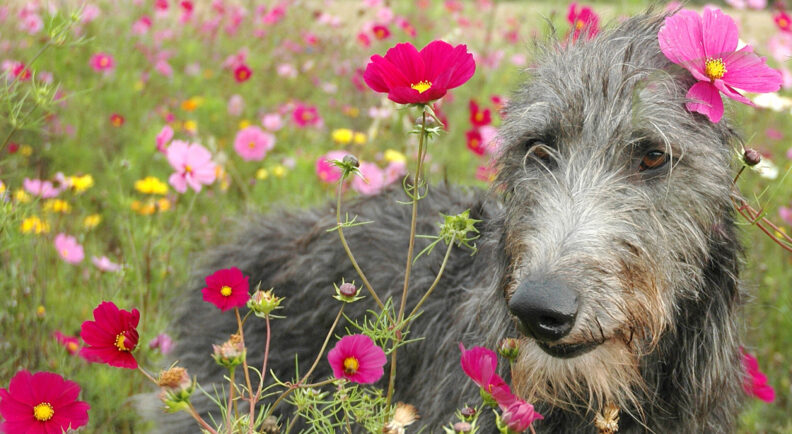
The DEPOHGEN® mutation is common in Scottish deerhounds, greyhounds, and Irish wolfhounds; and has been discovered in other sighthound dog breeds like basenjis, Italian greyhounds, whippets, salukis, and Borzois*.
*Note: This mutation is also found in some other popular breeds, such as English bulldogs, French bulldogs, Shetland sheepdogs, Newfoundland, border collies, German shepherds, and golden retrievers. However, whether this results in an increased risk for DEPOH is currently under investigation.
Why test with us?
Once we have determined your pet’s DEPOHGEN® genotype at WSU, veterinary pharmacologist Dr. Michael Court, who discovered the DEPOH genetic mutation, can work with you and your veterinarian through our online portal to determine the best course of action if your pet might need antifibrinolytic drug treatment.
Instructions
Step 1. Order a DEPOHGEN® test for your dog
Step 2. Collect a cheek swab sample
After receiving the test kit in the mail, please read all instructions before collecting the sample.
Take sample in the morning before your pet has eaten or wait at least 30 minutes after the pet has eaten. Sample must be free from food particles.
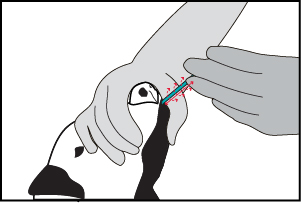
Place the brush bristles between the pet’s inner cheek and gum. Twirl the brush with your thumb and forefinger while moving it back and forth on the surface of the cheek.

Continue this motion for 20 seconds using the amount of pressure your pet will comfortably accept. Use your other hand to gently keep the pet’s mouth closed.

Repeat sample collection on the other side of the mouth using the second brush.
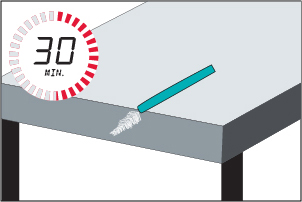
Air dry brushes for 30 minutes, then place the brushes in the swab sleeve. Do not touch the brush bristles with your fingers.
Step 3. Label paper backing of the cheek swab sleeve

Label the paper backing of the swab sleeve with the pet’s name, owner’s first and last name (or veterinary clinic), and the dog’s breed (use pen or permanent marker).
Note: Make sure the name on the swab pouch is the same as the name on the sample submission form. Samples submitted with unclear labeling cannot be tested.
Step 4. Ship the cheek swab sample

Place the swab pouch and the sample submission form (received with DNA kit or can be downloaded from the ordering site) in a shipping envelope. Business size #10 or padded envelopes work well; or you can reuse the cardboard mailer sent to you with the swabs.
Please use the appropriate shipping address (2 choices given below) depending on your carrier. Also include a complete return address.
Once we have tested your sample, we will send you an email with a link to login and download your results.
Send to one of the following shipping addresses:
US Postal Service
Washington Animal Disease Diagnostic Laboratory
Washington State University
PO Box 647034
Pullman, WA 99164-7034
FedEx/FedEx Air/UPS
UPS and FedEx do not deliver to WADDL on Saturday even if Saturday delivery is selected.
Washington Animal Disease Diagnostic Laboratory
Washington State University
1940 SE Olympia Avenue
Pullman, WA 99164
We want to make DEPOHGEN® testing for your patients as easy as possible.
Sample submissions
Consultations

When you test with us, you will have online, personal access to consult with veterinary pharmacologist Michael Court, BVSc, PhD, DACVAA, who discovered the DEPOH genetic mutation. He can work with you to determine the best course of action for your patients who may need to be treated with antifibrinolytic drugs.
Dr. Court is an anesthesiologist and director of the Pharmacogenomics Research Laboratory at WSU. He is recognized globally as an expert in veterinary pharmacogenomics.
Blood sample collection instructions

Please collect at least 2 ml of whole blood in a purple top (EDTA) tube. Store in refrigerator until sample is shipped. Do not freeze.
[Note: Blood collection supplies are provided by the veterinary clinic]

Complete submission form and payment information using a credit card.
You will receive an order confirmation with a sample identification number. Please print one copy of the confirmation for your records and include one copy in your shipment.
Labeling instructions
Blood Sample: Label the blood tube with dog’s name and owner’s first and last name.
DNA collection brush: Label the paper backing of the swab sleeve with the dog’s name, owner’s first and last name (or veterinary clinic), and the dog’s breed (use pen or permanent marker).
Note: Make sure the name on the blood tube or swab pouch is the same as the name on the sample submission form. Samples submitted with unclear labeling cannot be tested.
Shipping instructions
Blood samples

Normally, EDTA blood samples used for DNA testing can be shipped without cooling. Place the sample tube in a small zip closure bag, wrap it in bubble wrap and ship it with the submission form in a padded or bubble wrap mailer.
In very hot weather, place the sample tube in a small zip closure bag, wrap it in bubble wrap and ship it in a small box with one frozen gel pack. Include your submission form in the package in a separate plastic bag.
Please use the appropriate shipping address (2 choices given below) depending on your carrier. Also include a complete return address.
Once we have tested your sample, we will send you an email with a link to login and download your results.
DNA collection brush
Place swab pouch and submission form in a shipping envelope. Padded envelopes work nicely; or you can reuse the cardboard mailer sent to you containing the swabs.
Please use the appropriate shipping address (2 choices given below) depending on your carrier. Also include a complete return address.
Once we have tested your sample, we will send you an email with a link to login and download your results.
Send to one of the following shipping addresses:
US Postal Service
Washington Animal Disease Diagnostic Laboratory
Washington State University
PO Box 647034
Pullman, WA 99164-7034
FedEx/FedEx Air/UPS
UPS and FedEx do not deliver to WADDL on Saturday even if Saturday delivery is selected.
Washington Animal Disease Diagnostic Laboratory
Washington State University
1940 SE Olympia Avenue
Pullman, WA 99164-7034
Frequently Asked Questions
DEPOH Presentation
- Unexpected or excessive bleeding a few hours to a few days AFTER surgery or minor trauma.
- Dogs with DEPOH form normal blood clots, but the clots break down prematurely.
- Bleeding may appear as peri-incisional bruising, seeping from the incision, and/or internal bleeding from cut tissues, which may become generalized.
- Can be fatal if untreated.
Diagnostic tests
- Routine assays for primary and secondary hemostatic defects are generally normal.
- PT / aPTT times, platelet counts, and vWF concentration are normal
- Increased fibrinolysis may be detected using a (modified) thromboelastography (TEG) assay.
- DEPOHGEN® genetic testing can assist in diagnosis.
Affected breeds
- DEPOH was first documented in Greyhounds and Scottish Deerhounds.
- DEPOHGEN® testing indicates that most other sighthound breeds are at increased risk for DEPOH.
- The 8 breeds we have tested with the highest DEPOHGEN® frequency include: Irish Wolfhounds, Basenjis, Italian Greyhounds, Greyhounds, Scottish Deerhounds, Whippets, and Salukis.
- The same genetic mutation has been found in about 50% of non-sighthound breeds.
- The mutation is much rarer in non-sighthounds than in sighthounds.
- We are actively working to understand the risk for DEPOH among different breeds.
Genetics
- The first study of the genetics of DEPOH in dogs (Court et al ,2023) identified a novel mutation in the SERPINF2 gene.
- SERPINF2 encodes for alpha-2 antiplasmin, which inhibits the breakdown of fibrin clots by plasmin (fibrinolysis).
- Dogs that we have tested with the SERPINF2 mutation have decreased alpha-2 antiplasmin activity, predisposing them to premature clot dissolution.
- The DEPOHGEN® test was developed at WSU to detect this mutation and predict the risk for bleeding after surgery.
- Possible DEPOHGEN®genotypes are MUTANT/MUTANT, MUTANT/Normal, and Normal/Normal.
- MUTANT/MUTANT dogs are significantly more likely to bleed after surgery than Normal/Normal dogs.
- MUTANT/Normal dogs have a slightly higher risk for postoperative bleeding than Normal/Normal dogs.
DEPOHGEN™genotype guided prevention/treatment
- MUTANT/MUTANT Prophylactic administration of tranexamic acid* or aminocaproic acid is recommended before surgery in dogs with this genotype. Give either IV or orally at a dosage of 20 mg/kg starting 1 hour (IV) or 2 – 4 hours (orally) prior to the surgical procedure, and then orally three times daily for five days. For IV administration, dilute drug 1:3 with saline, and administer over 20 minutes to avoid vomiting. Diarrhea is occasionally observed with continued antifibrinolytic treatment, which responds to dose reduction or discontinuation.
- MUTANT/Normal Prophylactic treatment with antifibrinolytics is not indicated. Patients with this genotype should be monitored for signs of unexpected or excessive bleeding, especially during the first 24-48 hours after major surgery. Tranexamic acid or aminocaproic acid (20 mg/kg orally every 8 hours) should be given as needed. If initiated, treatment for 5 days is recommended.
- Normal/Normal Antifibrinolytic treatment is not indicated.
*Oral (500 mg or 250 mg capsule) and injectable (10mg/mL; 10 mL vial) tranexamic acid can be sourced through MWI Animal Health, as well as some other veterinary pharmaceutical suppliers.
Note: Factors in addition to DEPOHGEN® genotype will influence the risk for DEPOH. Bleeding is more likely to occur after invasive surgical procedures involving highly vascular tissue. Increased age also appears to increase the risk for bleeding. Other causes of unexpected/excessive bleeding cannot be excluded by DEPOHGEN® testing.
Special considerations
- Pregnant bitches: Tranexamic acid is considered safe and effective for the treatment of bleeding during pregnancy in humans. However, antifibrinolytic drugs can cross the placental barrier and the effects on the developing fetus are unclear. Consider avoiding these drugs unless there is a clear need (i.e. dog shows signs of unexpected or excessive bleeding).
- C-section: Mutant/Mutant dogs should receive prophylactic 20 mg/kg tranexamic acid or aminocaproic acid IV starting 1 hour before surgery and then orally every 8 hours for 5 days. Tranexamic acid is preferred since the transfer of drug into the milk is known to be relatively low.
- Lactation: Antifibrinolytic drugs can transfer into milk and the effects on nursing pups are unclear. Tranexamic acid is preferred since the transfer of drug into the milk is known to be relatively low.
Questions?
- Email: Dr Court
References
- Court MH, Kiser JN, Neibergs HL, Zhu Z, Dillberger JE. Identification by whole genome sequencing of genes associated with delayed postoperative hemorrhage in Scottish deerhounds. J Vet Intern Med. 2023 Feb 13. doi: 10.1111/jvim.16643. Epub ahead of print. PMID: 36780177.
- Lara-García A, Couto CG, Iazbik MC, Brooks MB. Postoperative bleeding in retired racing greyhounds. J Vet Intern Med. 2008 May-Jun;22(3):525-33. doi: 10.1111/j.1939-1676.2008.0088.x. Epub 2008 May 2. PMID: 18466249.
- Marín LM, Iazbik MC, Zaldivar-Lopez S, Lord LK, Stingle N, Vilar P, Lara-Garcia A, Alvarez F, Hosoya K, Nelson L, Pozzi A, Cooper E, McLoughlin MA, Ball R, Kisseberth WC, London CA, Dudley R, Dyce J, McMahon M, Lerche P, Bednarski R, Couto CG. Retrospective evaluation of the effectiveness of epsilon aminocaproic acid for the prevention of postamputation bleeding in retired racing Greyhounds with appendicular bone tumors: 46 cases (2003-2008). J Vet Emerg Crit Care (San Antonio). 2012 Jun;22(3):332-40. doi: 10.1111/j.1476-4431.2012.00735.x. Epub 2012 May 21. PMID: 22612729.
- Marín LM, Iazbik MC, Zaldivar-Lopez S, Guillaumin J, McLoughlin MA, Couto CG. Epsilon aminocaproic acid for the prevention of delayed postoperative bleeding in retired racing greyhounds undergoing gonadectomy. Vet Surg. 2012 Jul;41(5):594-603. doi: 10.1111/j.1532-950X.2012.00965.x. Epub 2012 Jun 19. PMID: 22712787.
- Saavedra PV, Stingle N, Iazbik C, Marín L, McLoughlin MA, Xie Y, Couto G. Thromboelastographic changes after gonadectomy in retired racing greyhounds. Vet Rec. 2011 Jul 23;169(4):99. doi: 10.1136/vr.d2671. Epub 2011 Jul 1. PMID: 21724753; PMCID: PMC3856634.
- FDA approved label information for Amicar (aminocaproic acid)
- FDA approved label information for tranexamic acid
Yes. Customs regulations make it challenging to ship biological samples (especially blood) into the USA. We encourage our international clients to test using cytology brushes (instead of blood) since the samples are stable and less costly to ship. We also recommend finding a local source of cytology brushes since it is much quicker and more efficient than waiting for our brushes to reach you. Widely available interdental brushes work just as well if the medical variety are not available. The next FAQ provides additional information about using your own brushes.
Mail to the USA requires a custom form (“commercial invoice”). We recommend providing the following information:
- Weight – 2 oz
- Value to declare – $2 – USD
- Contents – Interdental brushes (or cytology brushes)
Write on the outside of the package — “Exempt Animal Specimen”.
Once you are ready to send the samples, complete the online submission form and credit card payment. Print the submission form and mail it with your samples to the Post Office address provided on the form. You can also use a faster courier service if you prefer. We have a different address for couriers provided on the form.
Results will be sent to the email address provided on the submission form. It usually takes about a week to test the sample after it is received.
Yes. Some customers choose to purchase their own brushes since it is quicker and more efficient than waiting for our brushes to arrive by mail. International customers frequently choose this option.
Photos to the right show the type of medical cytology brushes we recommend, and also widely available interdental brushes that work just as well if the medical variety are not available. Use 2 per pet. “Sponge” type DNA collectors are not recommended.
If you use interdental brushes without a sleeve, once the brushes are dry you should put them into a small envelope or resealable plastic bag and write the name of the pet on the outside. Use separate envelopes/bags for each pet to avoid cross-contamination.
Remember to check the “use own brushes” option when completing the on-line submission form so we don’t send you a kit that you don’t need.

DEPOHGEN® tests are run in batches on Thursdays. If your test arrives in time to be included in Thursday’s batch, you should receive your results by Friday evening of that same week. Any test samples received after Wednesday are included in the next week’s batch.
DNA from your pet’s cheek cells using a swab is the same as DNA obtained from your pet’s blood. We offer tests using either type of sample because cheek swabs are an easy way for dog owners to collect DNA samples in their own homes, while blood samples are often preferred by veterinary clinics and hospitals.
Refunds may be requested only for samples that have not been processed. All refunds must be requested within 60 days of the date of purchase. The date of purchase is defined as the day the customer’s card is charged. Please contact us at cvm.depohgen@wsu.edu to request a refund.
DEPOHGEN® genotype results are reported only to the contact on the submission form. Collective data reports generated for public distribution have no identifiable features other than breed.