Feline antiparasitic has > 40% mortality rate in cats with the MDR1 mutation
Test Your Pet. Tell Your Veterinarian.
The PrIMe® MDR1 genetic test offered by WSU will determine if your pet has the MDR1 mutation. For dogs and cats with the MDR1 mutation, common medications can be potentially deadly.
Share the results with your veterinarian to let them know to avoid or adjust the dose of certain medications.
Veterinary pharmacologist Dr. Katrina Mealey discovered the MDR1 mutation in cats and dogs and is recognized worldwide as the leading expert in identifying problem medications. When you test with us, you and your veterinarian will have access to ask drug dosing questions through the MDR1Caddie™(for dogs) and WhispurrTM (for cats) which are monitored by Dr. Mealey.
Our PrIMe® MDR1 genetic tests
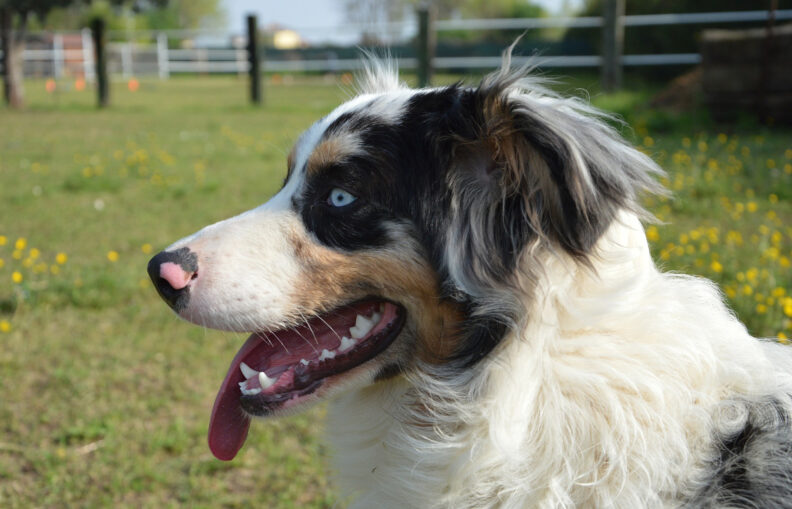
Dogs
Up to 75% of some dog breeds have the MDR1 genetic mutation. Herding breeds, long-haired whippets, and silken windhounds have the highest occurrences. It is also found in mixed breeds. Dogs with the mutation may have severe adverse reactions to some common medications.
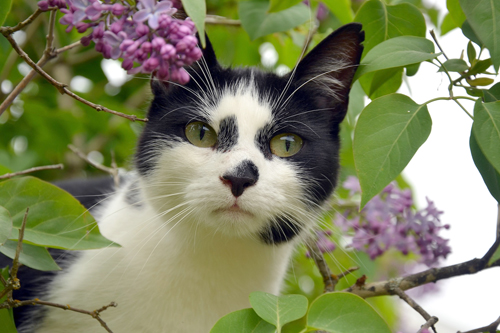
Cats
Up to 4% of all cats, roughly 4 million in the U.S. alone, have the MDR1 genetic mutation. Recently discovered by Dr. Katrina Mealey at WSU, she and her team are conducting research to learn which cat breeds are most affected and to identify medications that may cause adverse reactions in cats.
Sample collection
Step 1. Order a PrIMe® MDR1 test for your dog or cat
Step 2. Collect a cheek swab sample
After receiving the test kit in the mail, please read all instructions before collecting the sample.
Take sample in the morning before the dog or cat has eaten or wait at least 30 minutes after the pet has eaten. Sample must be free from food particles.
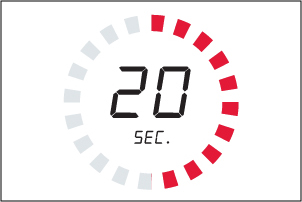
Continue this motion for 20 seconds using the amount of pressure your pet will comfortably accept. Use your other hand to gently keep the pet’s mouth closed.
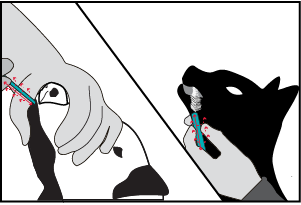
Repeat sample collection on the other side of the mouth using the second brush.
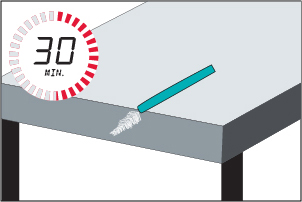
Air dry brushes for 30 minutes, then place the brushes in the swab sleeve. Do not touch the brush bristles with your fingers.
Step 3. Label paper backing of the cheek swab sleeve
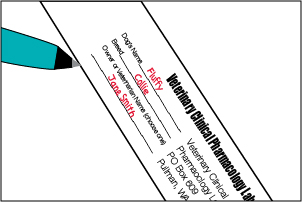
Label the paper backing of the swab sleeve with the pet’s name, owner’s first and last name (or veterinary clinic), and the dog’s breed (use pen or permanent marker).
Note: Make sure the name on the swab pouch is the same as the name on the sample submission form. Samples submitted with unclear labeling cannot be tested.
Step 4. Ship the cheek swab sample
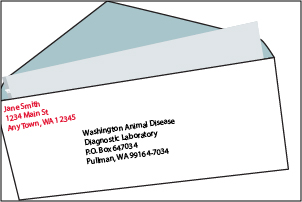
Place swab pouch and the submission form in a shipping envelope (business size #10 or padded envelopes work nicely). Please include a complete return address on the outside of your shipping envelope.
You will receive an email once we have received your sample.
US Postal Service
Washington Animal Disease Diagnostic Laboratory
PO Box 647034
Pullman, WA 99164-7034
FedEx/FedEx Air/UPS
Washington Animal Disease Diagnostic Laboratory
1940 SE Olympia Ave
Pullman, WA 99164
We want to make MDR1 testing for your feline and canine patients as easy as possible. Please contact us to find out how to set up your hospital’s account for per case or monthly statement billing.
- A cheek swab sample with nylon bristled cytology brush can be used within an hour of the patient’s death following the same instructions provided for live patients.
- Liver tissue harvested as soon as possible after the patient’s death (~1 gram) placed within 2 well-sealed leakproof containers (e.g., EDTA tube inside sealed plastic bag) and shipped with sufficient ice packs and insulation to ensure the sample is cold on arrival. Select “liver” from the dropdown menu for sample type.
Consultations

When you test with us, you will have access to MDR1Caddie™ to consult with veterinary pharmacologist Katrina Mealey, DVM, PhD, DACVIM, DACVCP, who discovered the MDR1 genetic mutation in dogs and cats. She can work with you to determine the best course of action for your patients who need to be treated with a P-glycoprotein substrate drug.
Dr. Mealey is the founding director of the Program in Individualized Medicine at WSU and is recognized as a global expert in veterinary pharmacogenetics.
Blood sample collection instructions
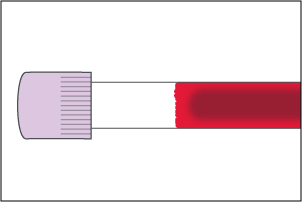
Please collect at least 2 ml of whole blood in a purple top (EDTA) tube.
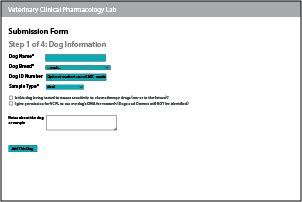
Complete submission form and payment information using a credit card.
Please include one copy of the submission form with your shipment. You will receive an order receipt to print for your records
Labeling instructions
Blood Sample: Label the blood tube with owner’s first and last name.
DNA collection brush: Label the paper backing of the swab sleeve with the pet’s name, owner’s first and last name (or veterinary clinic), and the pet’s breed (use pen or permanent marker).
Note: Make sure the name on the blood tube or swab pouch is the same as the name on the sample submission form. Samples submitted with unclear labeling may result in testing delays.
Shipping instructions
Blood and liver samples
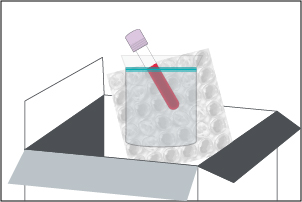
Place the sample in a small zip closure bag, wrap it in bubble wrap and ship it in a small box with one frozen gel pack. Include a copy of the patient’s submission form in the package in a separate plastic bag. Please include a complete return address on the outside of the envelope.
Blood samples cannot be sent through the US Postal Service.
DNA collection brush
Place DNA collection brush pouch and the submission form in a shipping envelope (business size #10 or padded envelopes work nicely). Please include a complete return address on the outside of your shipping envelope.
You will receive an email once we have received your sample.
DNA collection brush and blood samples
FedEx/FedEx Air/UPS
Washington Animal Disease Diagnostic Laboratory
1940 SE Olympia Ave
Pullman, WA 99164
DNA collection brush
US Postal Service
Washington Animal Disease Diagnostic Laboratory
PO Box 647034
Pullman, WA 99164-7034
Frequently asked questions
MDR1 tests are run in batches on Tuesdays. If your test arrives in time to be included in Tuesday’s batch, you should receive your results on the Wednesday of that same week. Any test samples received after Monday afternoon are included in the next week’s batch.
No. The MDR1 test is specific to the MDR1 genetic mutation only. Your results will tell you if your dog or cat has the MDR1 genetic mutation.
DNA from your pet’s cheek cells using a swab is the same as DNA obtained from your pet’s blood. We offer tests using either type of sample because cheek swabs are an easy way for dog or cat owners to collect DNA samples in their own homes, while blood samples are often preferred by veterinary clinics and hospitals.
Refunds may be requested only for samples that have not been processed. Samples not received within 60 days of the date of purchase will have a refund processed by WSU’s fiscal year end. The date of purchase is defined as the day the customer’s card is charged. Please contact us to request a refund.
MDR1 genotype results are reported only to the contact on the submission form. Collective data reports generated for public distribution have no identifiable features other than breed.
Yes, we have identified many mixed breed dogs with the MDR1 mutation. Some of them do not look like herding breed dogs, so that is why we strongly recommend testing mixed breed dogs for the MDR1 mutation prior to giving your dog one of the medications known to cause adverse reactions.
Why choose us?

Fast results
Get your results in as little as one week.

MDR1Caddie
Online access to a board-certified veterinary pharmacologist when you test with us.

Trusted research
WSU discovered the MDR1 mutations and developed the first diagnostic tests.
What is multidrug sensitivity?
Some dogs and cats have a mutation in the MDR1 (multidrug resistance 1) gene also known as the ABCB1 gene, which plays an important role in limiting drug distribution to the brain and in enhancing the excretion of many drugs. Animals with the mutation may have severe adverse reactions – including tremors, disorientation, blindness, severe muscle weakness, and death – to some common medications.